
Guide
The sloyd knife: what it is and how to choose one
A sloyd knife is a small, general-purpose woodcarving knife with a straight edge and a tapered wooden handle — the first knife many people learn to carve with.
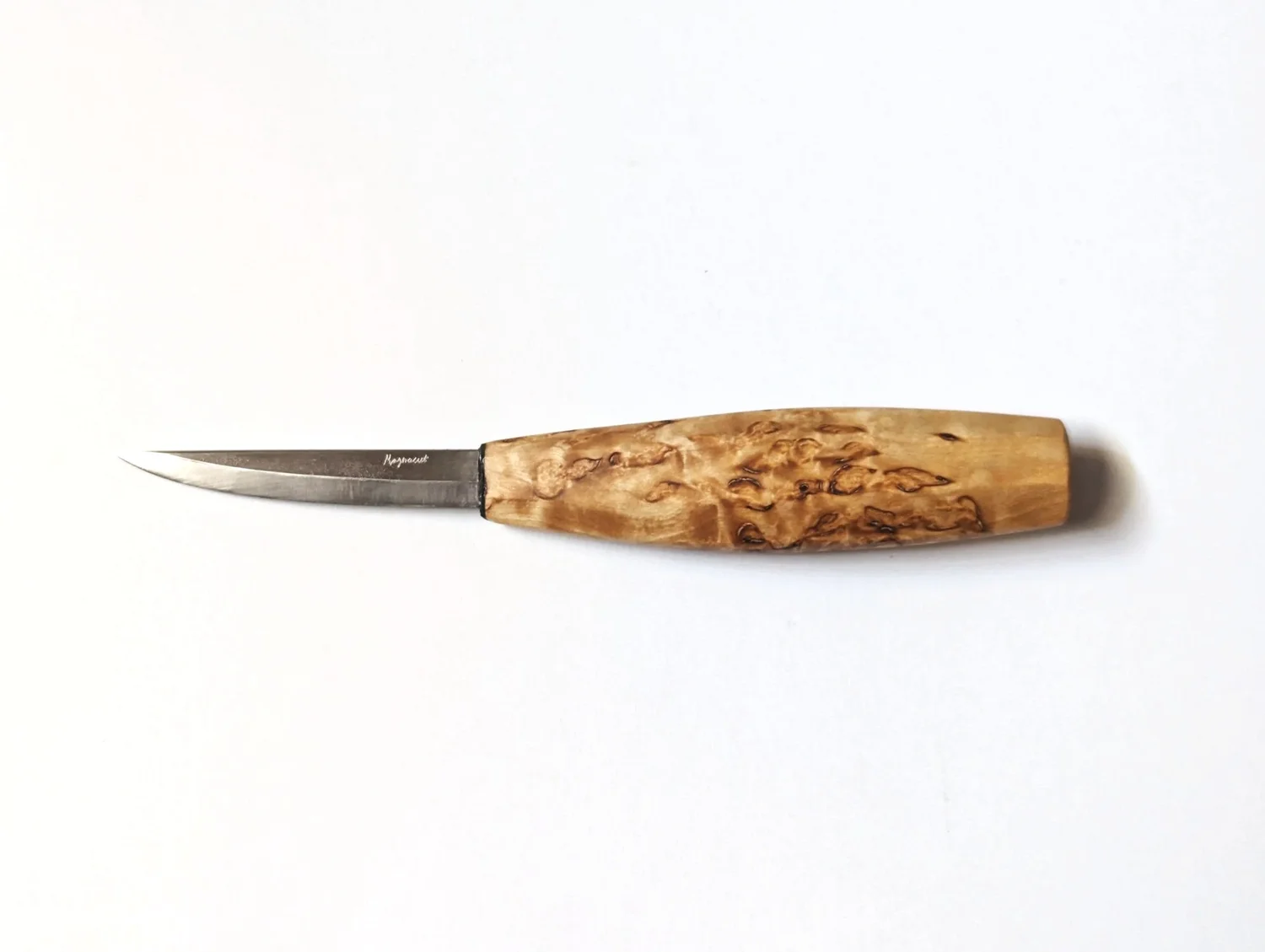
Sloyd Knife 75 Magnacut — handmade in Stallarholmen
The short answer
Sloyd (Swedish: slöjd) means handiwork. A sloyd knife is the simple, all-purpose carving knife used in Swedish school slöjd: a straight cutting edge, a tip that is not sharply pointed, a grind that is easy to keep sharp, and a wooden handle that sits well in the hand. One knife covers whittling, spoons, green wood and most work in between.
Where the name comes from
The word sloyd is the anglicised spelling of Swedish slöjd, meaning handicraft or handiwork. As a school subject it began in Finland in the 1860s, was refined at Otto Salomon's teachers' seminary at Nääs in Sweden from the 1870s, and then spread worldwide. In Sweden slöjd has been a school subject since the 1870s and compulsory since 1955.
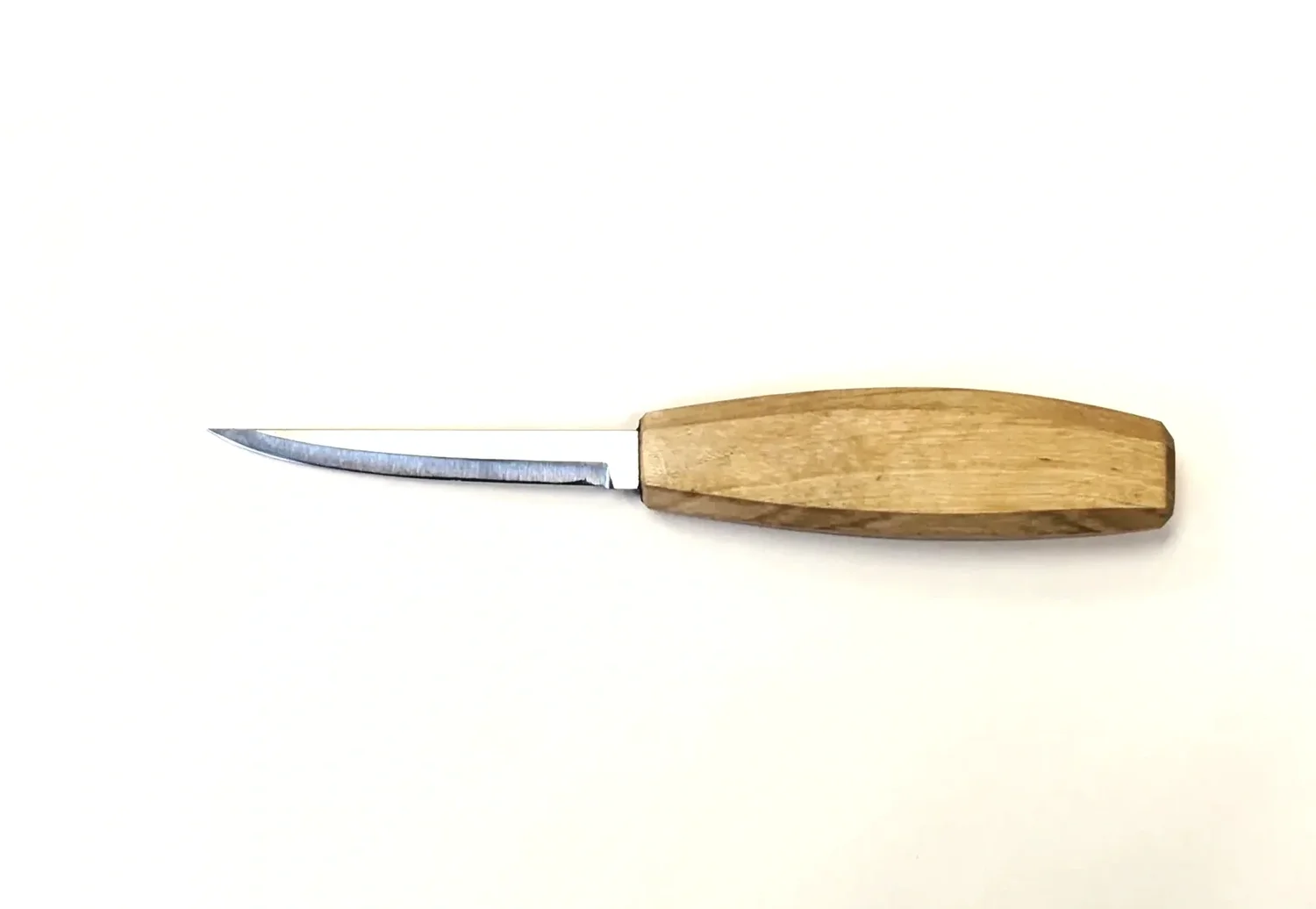
The knife was one of the first tools a student learned, and the simple pattern travelled out of the classroom: a straight cutting edge, a blade that thins towards the edge with a blunt, angled tip, and an oval wooden handle that narrows next to the blade so you can work close to the wood.
How a sloyd knife differs from other carving knives
The difference is not a keen tip or a curved blade — it is that the knife is built to be general-purpose and easy to maintain.
- A straight edge rather than a curved one. You can lay the whole bevel flat on a stone and hold the angle, which makes the knife easy to sharpen and to keep sharp.
- A blunt, angled tip. Safer for beginners and for children working with wood, and it will not dig in and mark your bench.
- A low grind, often a hollow grind with a flat secondary bevel. The grind runs all the way to the edge, so you only remove material where it matters.
- An oval, tapered wooden handle. The thicker part rests in the hollow of your hand and the narrow part next to the blade gives clearance to carve close to the blank.
- An included edge angle of around 27–30 degrees on my knives — a good general range for carving, where a higher angle lasts longer in hard or dry wood.
Read more about angles in the Facts article on sharpening angles for carving knives and about what a hollow grind is.
What is a sloyd knife used for?
It covers most carving tasks with a single tool — which is why it was the standard knife of the classroom.
- Whittling and paring: straight push cuts and light slicing along the grain.
- Spoons and small objects in green wood, where a straight blade gives good control.
- Chamfering, flattening and detail work after a knife with more blade has done the roughing out.
- Burnishing and smoothing a surface with the rounded, polished spine.
- General bench work in wood — a dependable tool that stays within reach.
Which size and which steel?
The number in the name is the cutting edge in centimetres. Start at 75 if you are unsure — a longer blade is more fun once your hand has found the angle.
| Knife | Cutting edge | Overall length | Steel | Best for | Price |
|---|---|---|---|---|---|
| Sloyd Knife 75 Magnacut | ca 7.5 cm (3 in) | ca 18 cm (7 in) | CPM Magnacut | The general all-round size | €195 |
| Sloyd Knife 95 Magnacut | ca 9.5 cm (3 3/4 in) | ca 21 cm (8 1/4 in) | CPM Magnacut | More blade for bigger work | €195 |
| Mini Knife 32 Magnacut | ca 3.2 cm (1 1/4 in) | ca 14.5 cm (5.7 in) | CPM Magnacut | Detail work and pocket size | €120 |
| Chip Carving Knife | ca 2.2 cm (7/8 in) | ca 6 cm (2 3/8 in) | 26C3 | Chip carving and patterns | €110 |
On the steels: Magnacut, 26C3 and carbon steel for carving tools — Magnacut is stainless, holds its edge longer and is still easy to sharpen; 26C3 is an affordable classic high-carbon steel that is very easy to sharpen, but it is not stainless and must be kept dry.
Sharpening a sloyd knife
Because the grind is low and the edge is straight, you mostly lay the bevel flat on the stone. A few passes on a diamond stone, then a few on a strop with diamond paste, and the knife is sharp again.
Make your own handle
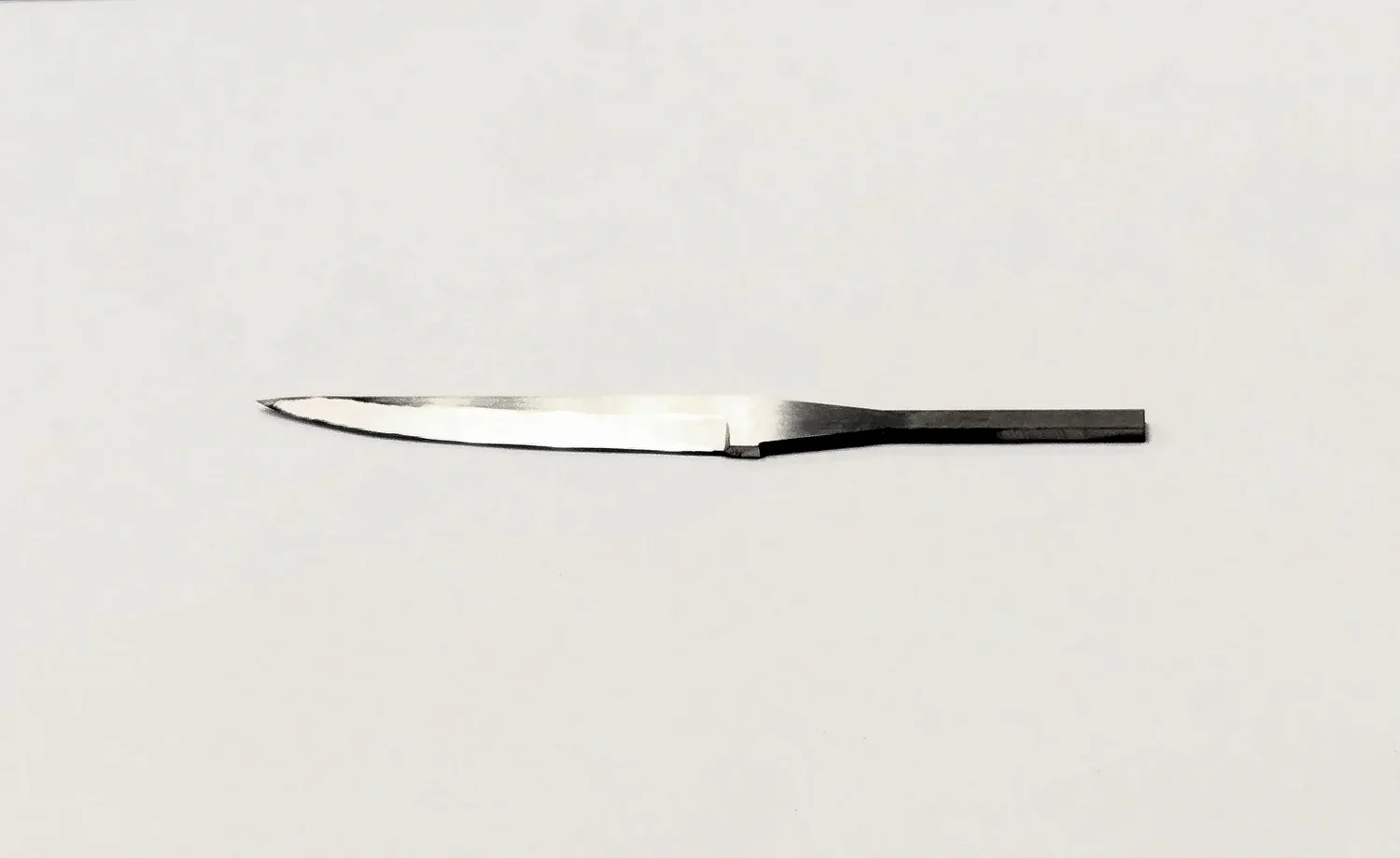
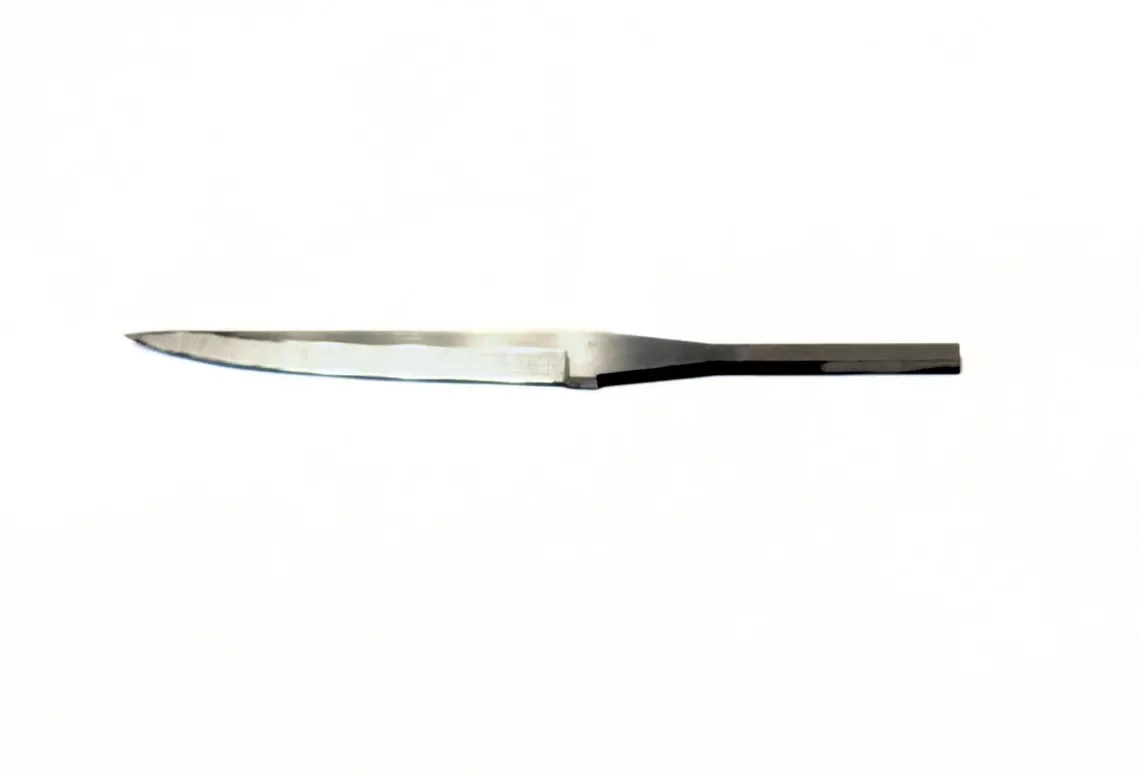
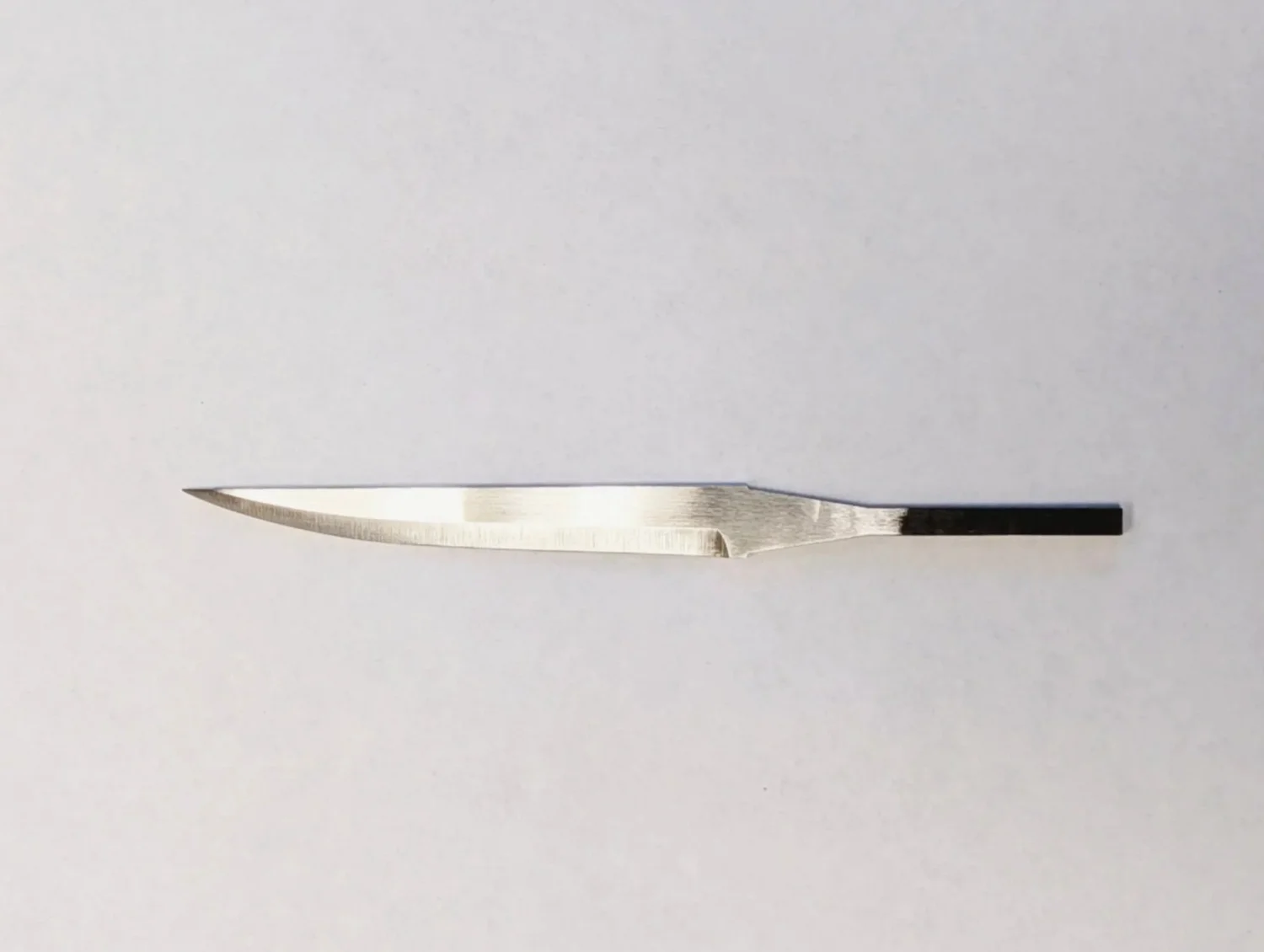
A sloyd knife is as much handle as blade. I sell the blades on their own, already ground flat over hollow, so you can shape a handle in birch or masur birch — or replace a worn handle on an older knife.
Handmade sloyd knives from the workshop
Every knife is handmade and signed by Mattis in Stallarholmen, Sweden, with a rounded and polished spine for comfortable push cuts.
A word about the workshop
I'm Mattias Höög, and I make carving knives, blades and sharpening tools in Stallarholmen, Södermanland. If you want a second opinion on which sloyd knife suits your work, or your knife needs sharpening, get in touch.